
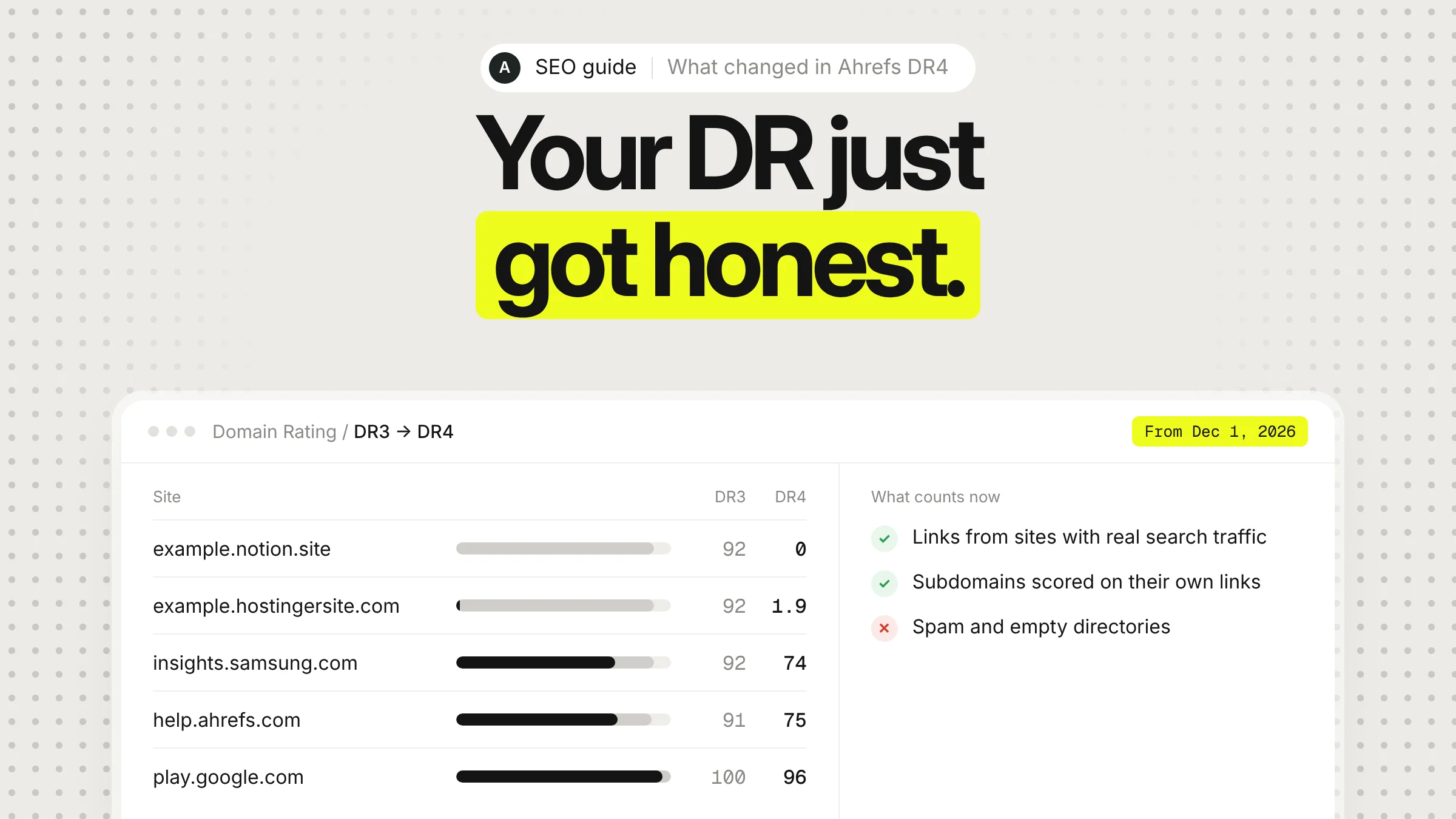
On December 1, 2026, Ahrefs switches every Domain Rating in its app to a new formula called DR4. For most big, well-known websites almost nothing changes. For a lot of small sites, directories and "high DR" link sellers, the number drops hard, and some fall all the way to zero.
If you are a solo founder who is just starting with SEO, this is good news. The old shortcuts are getting easier to spot, and the things that actually bring traffic are the things DR4 now rewards.
This guide covers five things in plain words: what DR is and why it matters for traffic, what changes on December 1, what to check before you pay for any listing or backlink (with free tools to compare old and new DR), what stops working, and how we can help you grow faster.
The short version
- DR is a 0 to 100 score from Ahrefs that shows how strong a website's backlinks are. It is not a Google metric, but sites with stronger links tend to rank and get more traffic.
- From December 1, DR4 replaces DR3 in the Ahrefs app. Only links from sites that get real search traffic count for much. Ahrefs says about half as many websites have a DR4 score as had a DR3 score.
- Subdomains no longer borrow their parent's DR. A page on notion.site went from DR 92 to 0 in Ahrefs' own example.
- Spam takes the biggest hit. Spam-labeled sites that had DR 30 to 70 dropped by a median of 15 to 20 points.
- Before you buy a link, check DR4, not DR3, and check that the site gets real visitors from Google. You can do both for free.
1. What DR is, and why it helps you get traffic
When another website links to yours, that link is called a backlink. Search engines treat backlinks a bit like recommendations: if many trusted sites point to you, you are probably worth showing to people.
Domain Rating (DR) is how Ahrefs, one of the biggest SEO tools, turns all of a website's backlinks into one number from 0 to 100. A brand new site starts at 0. Google, Wikipedia and Facebook sit near 100.
Three things are worth knowing about it:
- It is about links only. Ahrefs says it plainly: DR "is a link-based metric". It does not look at your content, your design or how old your domain is.
- It is logarithmic. Going from 54 to 55 is easy compared to going from 84 to 85. Each step up needs a lot more links than the one before.
- It is not Google's number. Google never uses DR. It is a quick way for people to compare sites, which is why every link seller, directory and "write for us" page puts their DR in big letters.
So why should a founder care?
Because links still move traffic, and most pages never get any. Ahrefs studied the pages in its index and found that 96.55% of pages get zero traffic from Google, with a clear link between the number of sites linking to a page and how much search traffic it gets. Out of about 20 million pages with no referring domains at all, fewer than 3,000 got more than 1,000 visits a month.
In other words: a great page with no links is usually invisible. DR is the fastest way to see how much link strength a site has, yours or anyone else's.
How to start with SEO if you have zero
You don't need a big budget to start. In the first month:
- Set up Google Search Console (free). It shows which searches you already appear for and whether Google can index your pages.
- Set up Ahrefs Webmaster Tools (free for your own site). It shows your backlinks, your DR and the technical issues on your site.
- Write down 10 to 20 searches your buyers make before they need you, like "best invoicing tool for freelancers" or "how to automate client onboarding". Make one page that answers each one properly.
- Get your first 5 to 10 links from real places: partners, tools you integrate with, communities you are active in, founder interviews and podcasts.
That last step is where DR4 matters, because it changes which of those links are worth anything.
2. What changes on December 1
Ahrefs announced DR4 on November 5, 2026. It becomes the default Domain Rating in the Ahrefs app on December 1. The old score, DR3, stays in the API for a short time after that, so you can still compare the two.
There are two big changes.
Change 1: only links from sites with real traffic count for much
DR4 is calculated from a smaller, higher-quality pool of websites: the ones Ahrefs estimates actually get organic search traffic. A link from a site that nobody finds on Google now adds very little.
The result: about half as many websites have a DR4 score as had a DR3 score. Sites that built their DR on links from empty blogs, link farms and directories nobody visits lose most of it.
Change 2: subdomains get their own score
Before, a page on a subdomain like yourname.notion.site or yourname.github.io inherited the DR of the main domain. So a free Notion page could show up as "DR 92". With DR4, every subdomain gets a score from its own links.
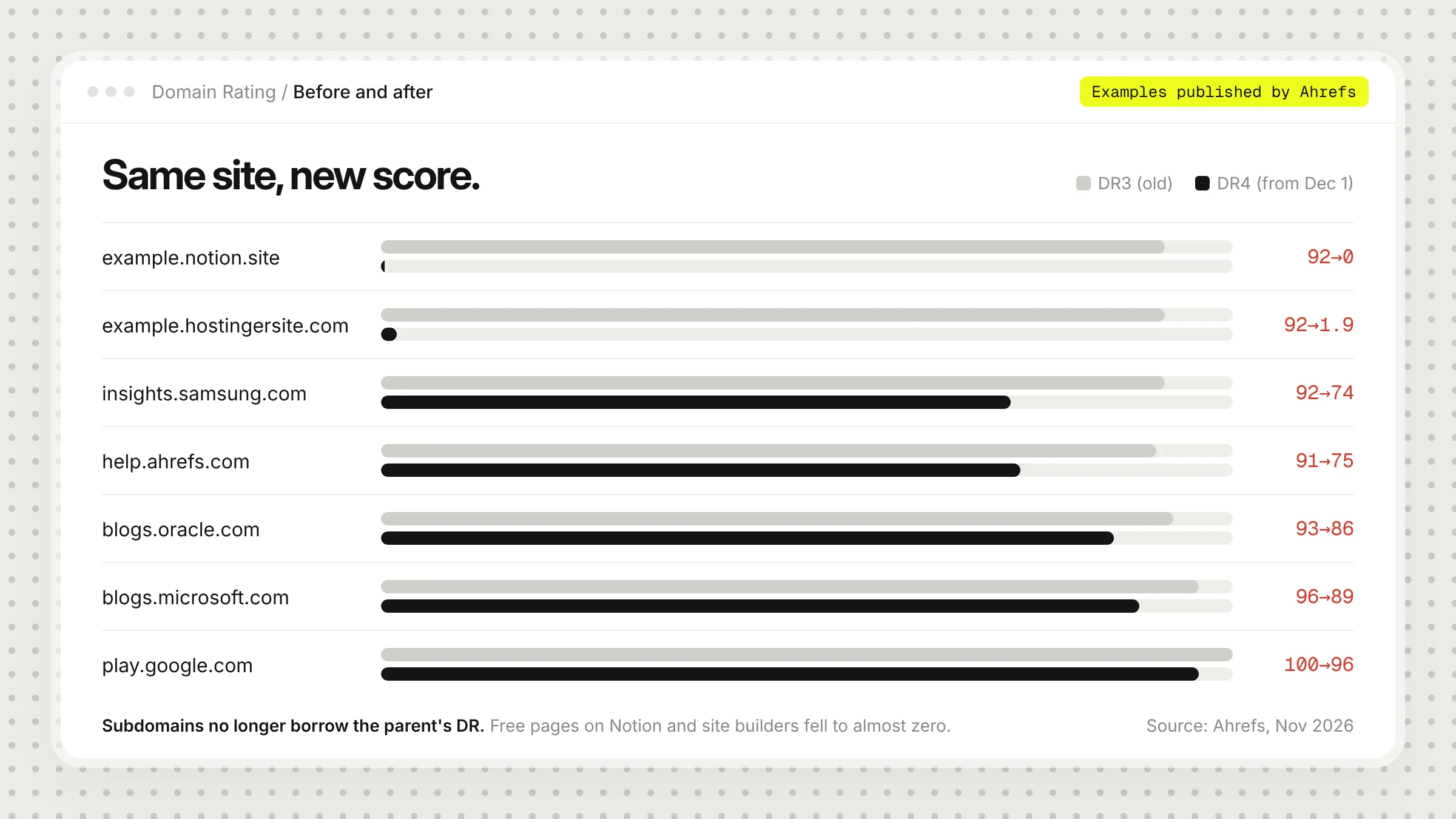
Here are real examples Ahrefs published:
| Site | DR3 | DR4 |
|---|---|---|
| example.notion.site | 92 | 0 |
| example.hostingersite.com | 92 | 1.9 |
| insights.samsung.com | 92 | 74 |
| help.ahrefs.com | 91 | 75 |
| blogs.microsoft.com | 96 | 89 |
| play.google.com | 100 | 96 |
| github.io (all of it) | down 32 points |
Who goes up and who goes down
- Big, real sites mostly stay put or go up. Of the top 1,000 sites by search traffic, 64.3% went up, 15.8% stayed the same and 19.9% went down. The average drop among those that fell was just 7.3 points.
- Spam sites drop the most. Sites Ahrefs labels as spam with a DR3 between 30 and 70 dropped by a median of about 15 to 20 points.
- Small sites can drop a lot, even honest ones. DomainRating.app tracked 53 sites and found sites that had DR 40 to 59 dropped by about 32 points on average, and DR 20 to 39 sites by about 21 points. 14 of the 53 sites now have a DR4 of 0. Their own site went from 24 to 5.
Ahrefs says the new score matches Google rankings much better: across 10 million sites and subdomains, DR4's correlation with top 10 rankings is 0.359, compared to 0.140 for DR3. That is about 2.5 times stronger.
Did my Google traffic just change?
No. DR is Ahrefs' number, not Google's. If your DR drops on December 1, nothing changed on Google that day. What changed is that the number is now more honest about what your links are really worth. Compare yourself to your competitors' DR4, not to your own old DR3.
3. What to check before you buy a listing or a backlink
This is the practical part. Whether it is a directory listing, a guest post, a "launch list" or a link insertion, run through these checks before you pay. Most take a minute and cost nothing.
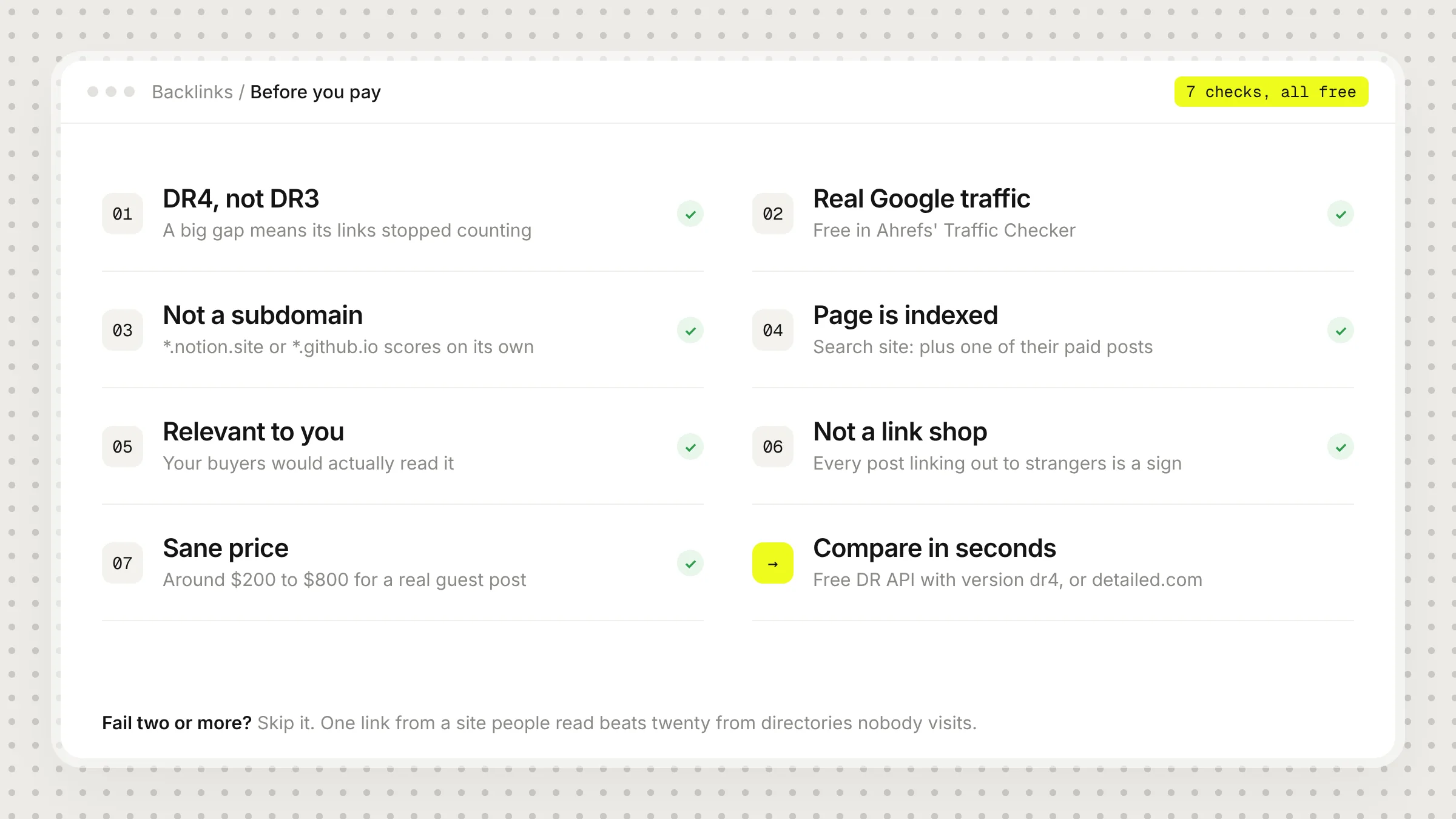
Check 1: Compare DR3 and DR4
A big gap between the two is the clearest red flag you will get. If a site sells itself as "DR 55" and its DR4 is 12, most of its old score came from links that no longer count.
Free ways to check:
- Ahrefs' free Domain Rating API. It is free to call with a free Ahrefs API key and checks up to 1,000 domains at once. By default it returns DR3. Add
"version": "dr4"to get the new score, then run it again without it to see the difference. Ahrefs says it hit 10 million requests a day soon after launch. - Detailed.com's DR4 preview. Search any domain or subdomain to see old and new DR side by side, no code needed.
- Ahrefs' Website Authority Checker. A quick free DR lookup for one site at a time, no account needed. It shows the same DR as the Ahrefs app.
If you are comfortable with a terminal, this is all it takes with the API (replace the key and the domains):
curl -X POST "https://api.ahrefs.com/v3/public/domain-rating-free?output=json" \
  -H "Authorization: Bearer YOUR_FREE_API_KEY" \
  -H "Content-Type: application/json" \
  -d '{"targets": ["site-you-want-to-buy-from.com", "competitor.com"], "version": "dr4"}'
Run it once with "version": "dr4" and once with "version": "dr3", then compare. Put the list of every directory and blog you are considering in targets and you have a shortlist in seconds.
Check 2: Does the site get real search traffic?
This is the heart of DR4. Paste the domain into Ahrefs' free Traffic Checker. If a site with "DR 60" gets fewer than a few hundred visits a month from Google, its links will not help you much, and its DR4 will probably show it.
A good rule: the page your link sits on should be one real people could find.
Check 3: Is it a subdomain?
If your link lives on something like name.notion.site, name.github.io, name.blogspot.com or name.hostingersite.com, the parent's big DR does not count anymore. Judge the subdomain on its own.
Check 4: Is the page indexed?
Search Google for site: plus the exact URL of an article the site already published for someone else. If Google has not indexed their paid posts, it will not index yours either, and a link on a page Google ignores is worth close to nothing.
Check 5: Is it relevant to you?
A link from a site your buyers actually read can send you customers, not just SEO value. A link from a site about casinos, crypto and dog food all at once sends nothing and can look spammy.
Check 6: How many links does it sell?
Look for "write for us", "sponsored post" or "submit your startup" pages and scroll through recent articles. If every post links out to three unrelated businesses, the site is a link shop. These are exactly the sites DR4 is designed to discount.
Check 7: Is the price sane?
The average price SEOs say they are willing to pay for one high-quality backlink is about $509, and guest posts on DR 40 to 70 sites usually cost $200 to $800. A "DR 70" link for $15 is almost always a link that DR4 will treat as worthless. If a deal sounds too good, check its DR4 and traffic first.
4. What will not work anymore
DR4 does not change Google, but it does remove the illusion that made a lot of cheap tactics look good. These are the ones to drop or rethink:
- Submitting to 100+ directories at once. Most launch lists and directories get no search traffic, so their links barely count in DR4. A handful of directories that people actually use, and that rank on Google for your category, are still worth it. The rest are a waste of time.
- Free subdomain "blogs" and Web 2.0 pages. Notion pages, GitHub Pages, Blogspot or site-builder subdomains created just to link to yourself no longer borrow the parent's authority. Ahrefs' own examples dropped from 92 to 0 and 1.9.
- Buying "DR 50+" link packages. If the only selling point is a DR3 number, expect it to fall. Spam-labeled sites in the DR 30 to 70 range lost a median of 15 to 20 points.
- Private blog networks and link farms. Networks of sites with no real readers were already risky with Google. Now their DR collapses too, so they stop looking good on paper.
- Link swaps between tiny sites. "I link to you, you link to me" between two sites with no traffic adds almost nothing in DR4.
- Using DR as your goal. DR is a thermometer, not the cure. The goal is traffic and signups. Ahrefs itself says a DR score is "not a reflection of the quality of your content".
What works now
- Links from sites with real readers in your niche: guest posts on blogs people actually visit, podcast and newsletter mentions, interviews, partner and integration pages.
- Things people want to link to: free tools, templates, original data and honest comparisons. One link from a relevant, widely read blog beats twenty from directories nobody visits.
- Pages that deserve to rank: clear answers to the searches your buyers make, fast pages, clean structure, and content AI assistants like ChatGPT and Perplexity can quote.
- Links to the right place: if your blog or app lives on a subdomain, it now needs links of its own.
5. How Anivia Labs can help you grow faster
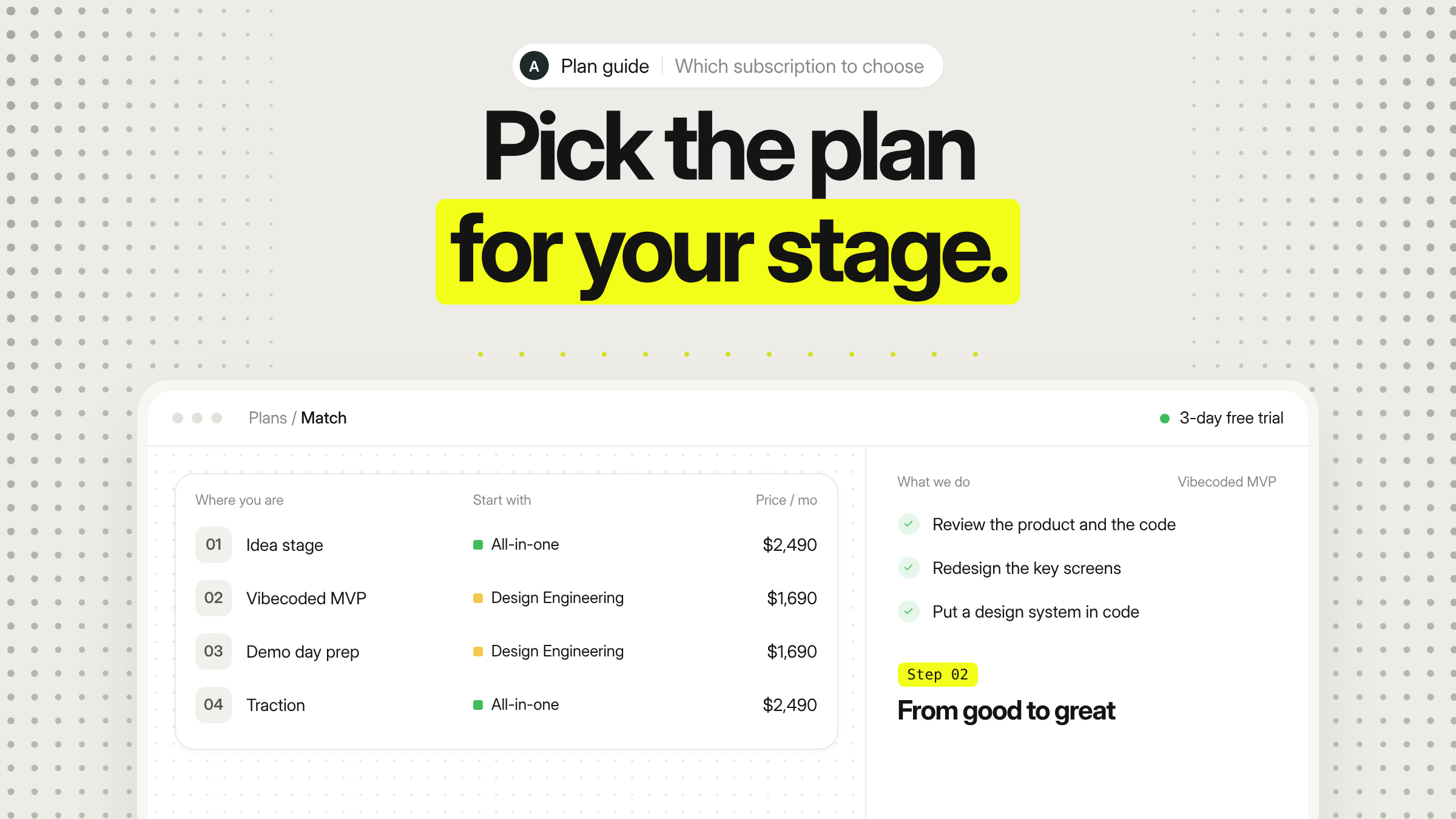
Most founders know they should do SEO. The hard part is doing it every week while also building the product. That is what our SEO service is for. It is part of the All-in-one plan at $2,490 a month, with a 3-day free trial.
- SEO analysis under DR4. We check your site and your competitors on DR4, review your existing backlinks, and show you which ones still count and which ones were never worth paying for. You get a short plan in plain words, not a 60-page audit.
- Backlink outreach that passes the checks above. We find sites in your niche with real search traffic, pitch them, and write the guest posts, data pieces and partner pages that earn the link. No link farms, no "DR 70 for $15".
- Content that ranks and gets cited. Blog posts, comparison pages, alternatives pages and landing pages written around what your buyers search, designed and published on your site, and structured so AI answer engines can quote you.
- Technical SEO fixed in your code. Indexing, speed, sitemaps, structured data and internal links, shipped as pull requests to your site rather than left in a document.
- Reporting tied to signups. We track traffic and conversions, not just rankings and DR.
If December 1 left you with a lower DR than you expected, that is a good moment to start over with links that last. See how our SEO service works or start your free trial.