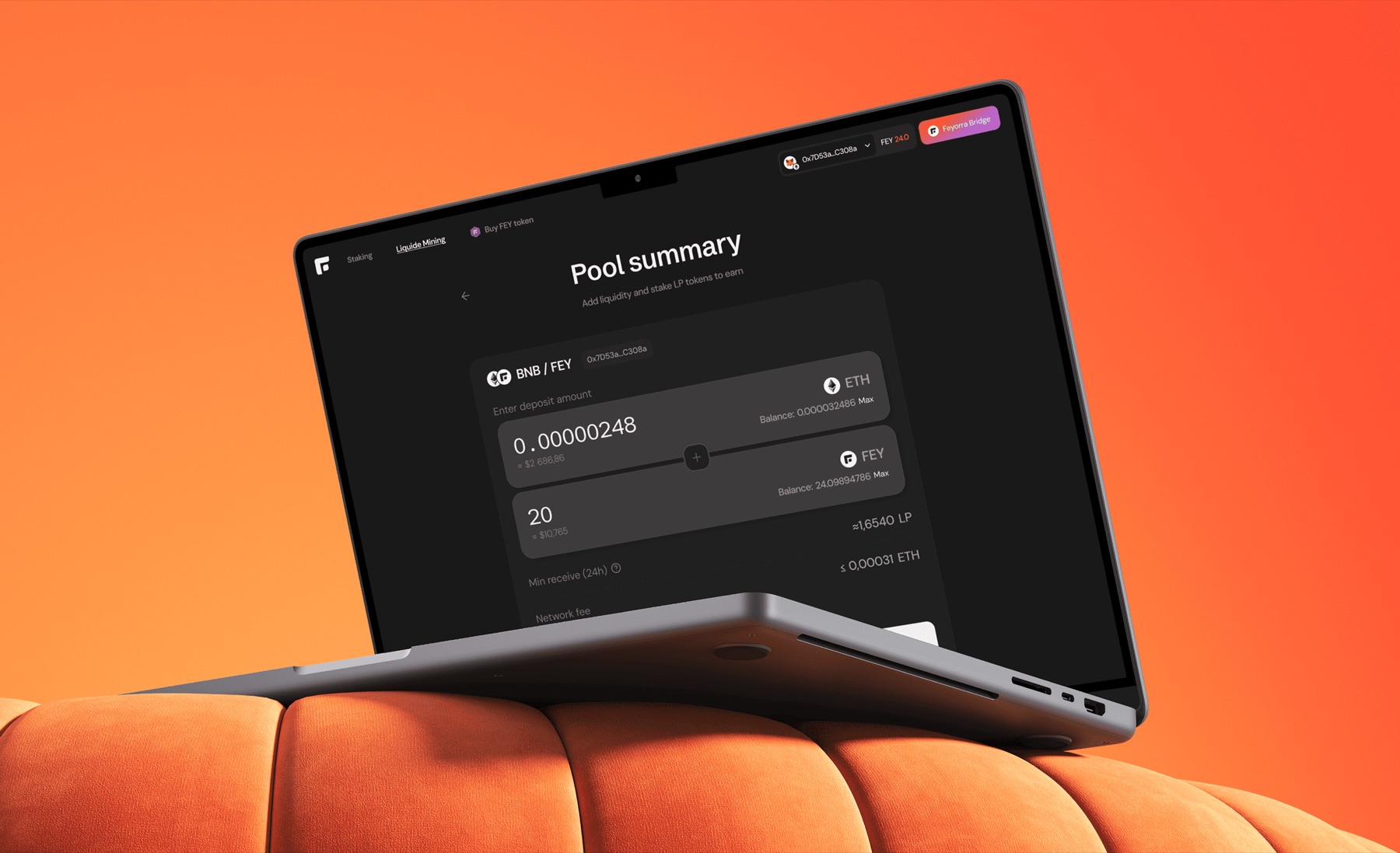
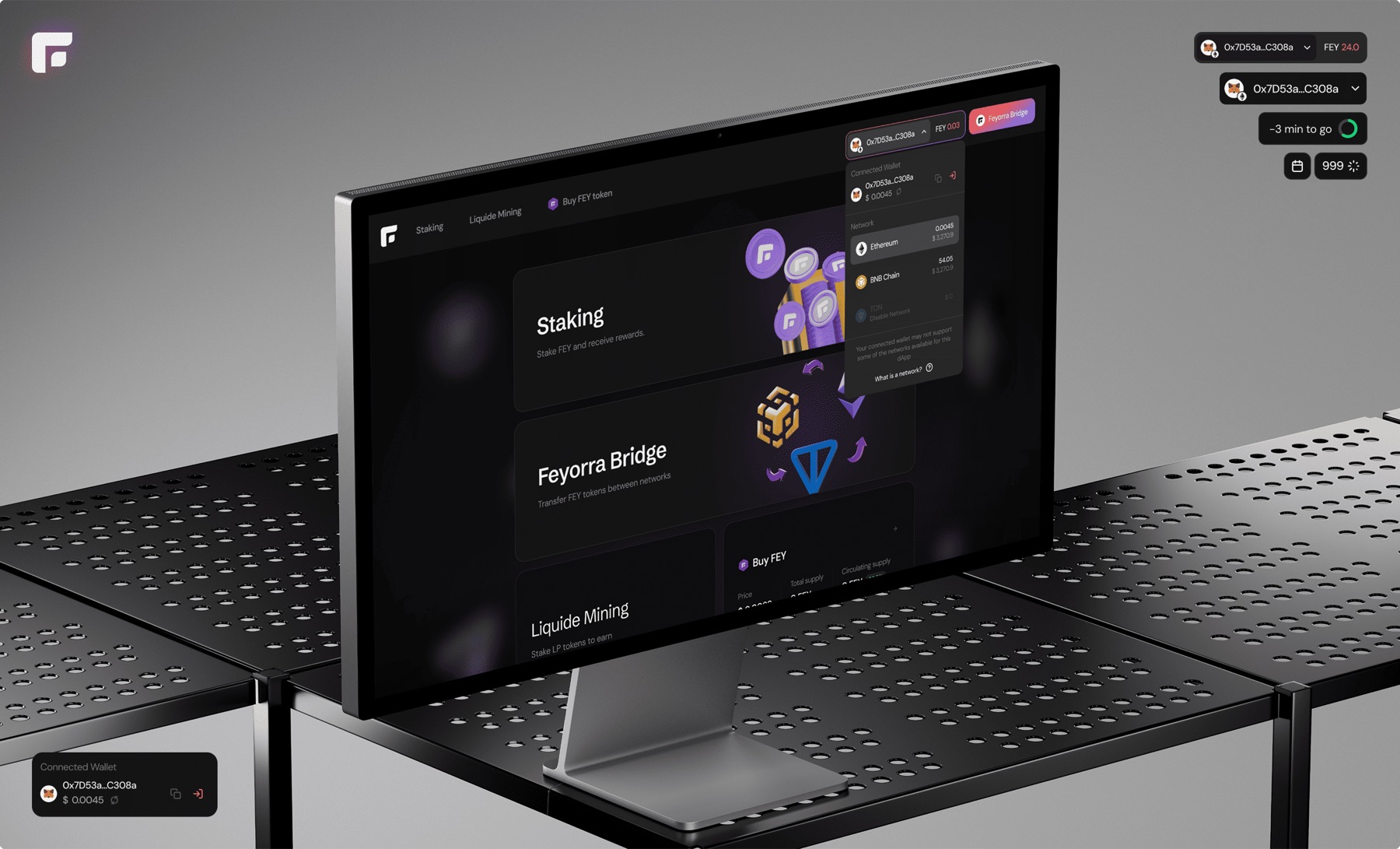
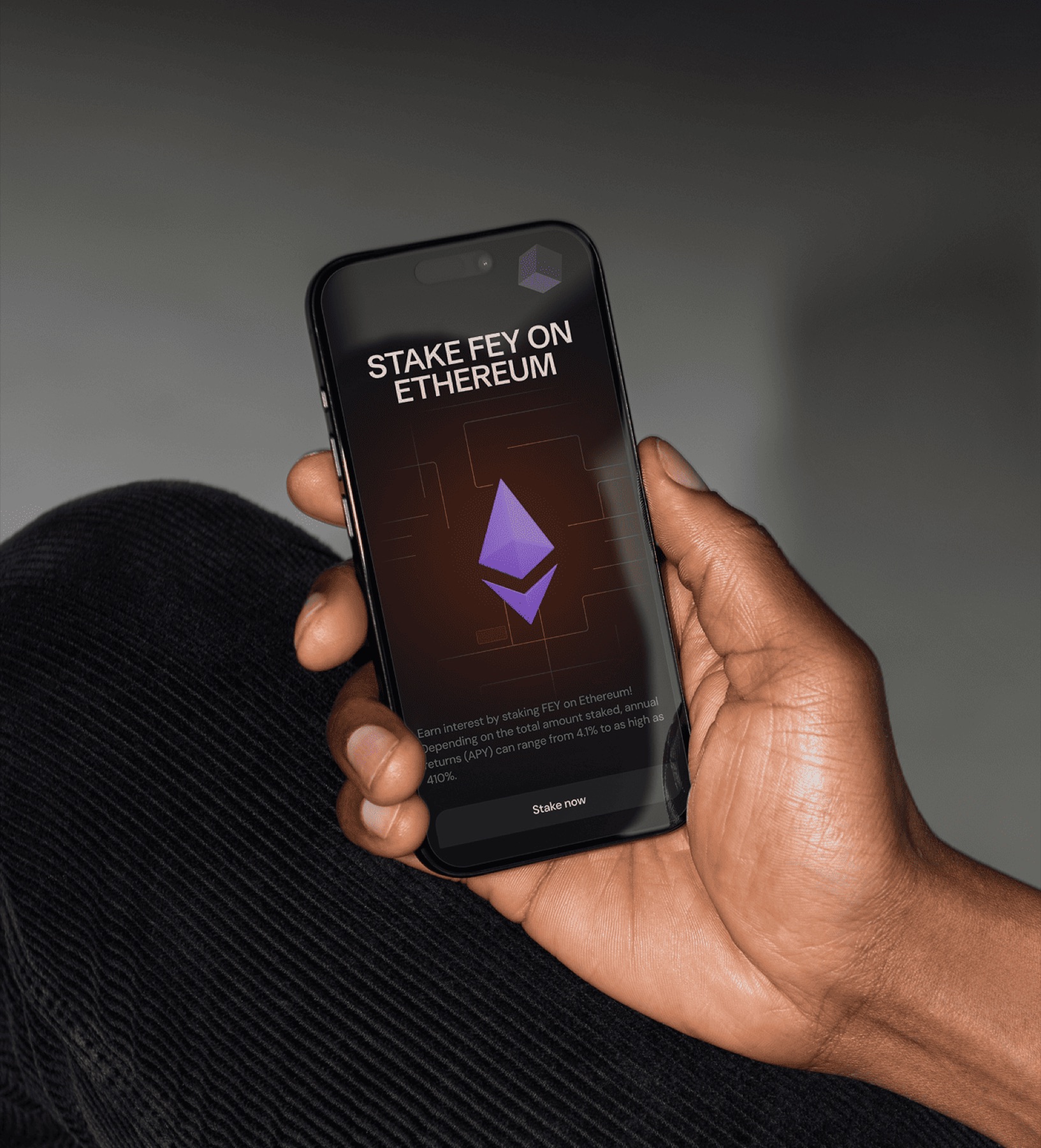
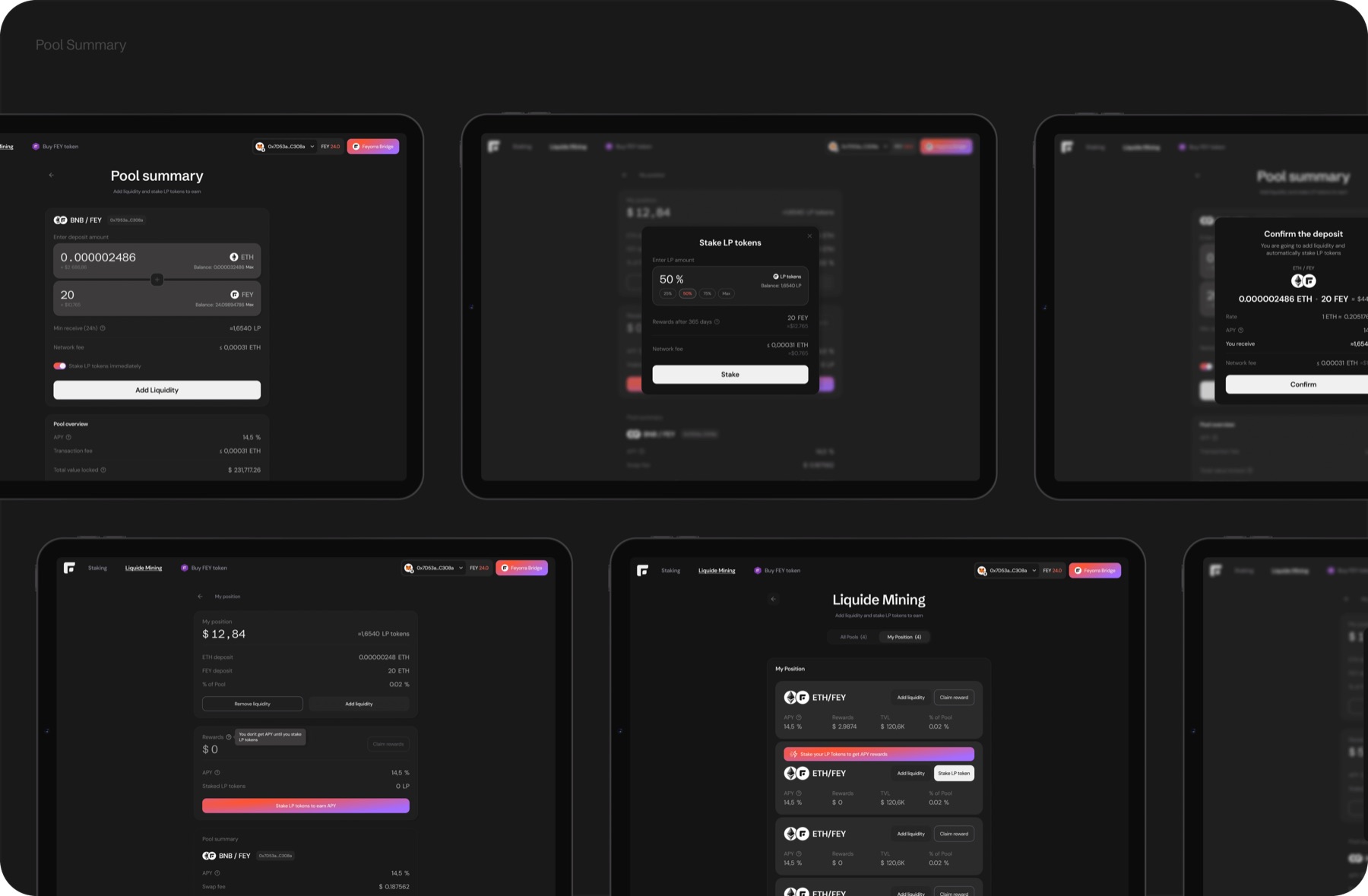
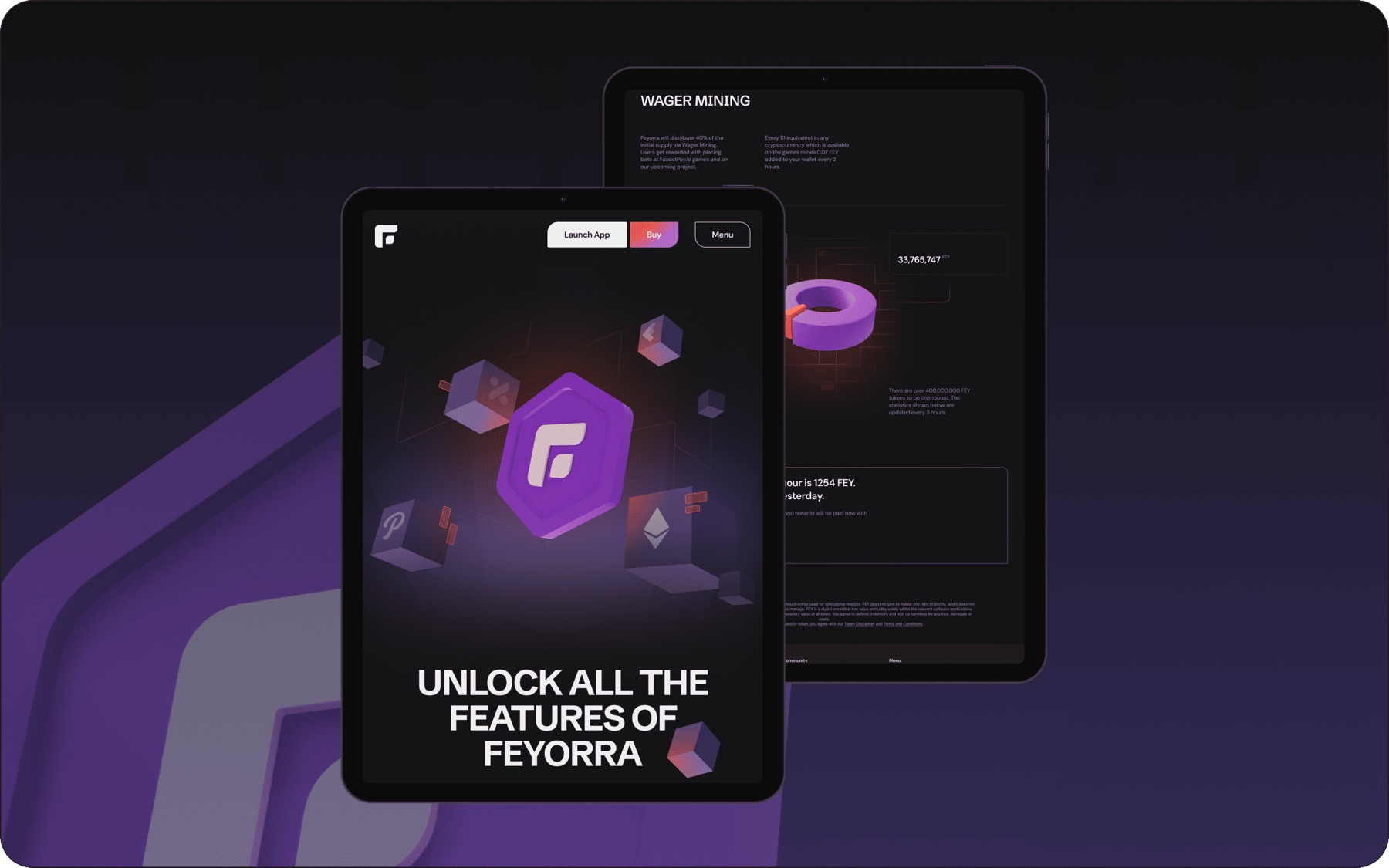
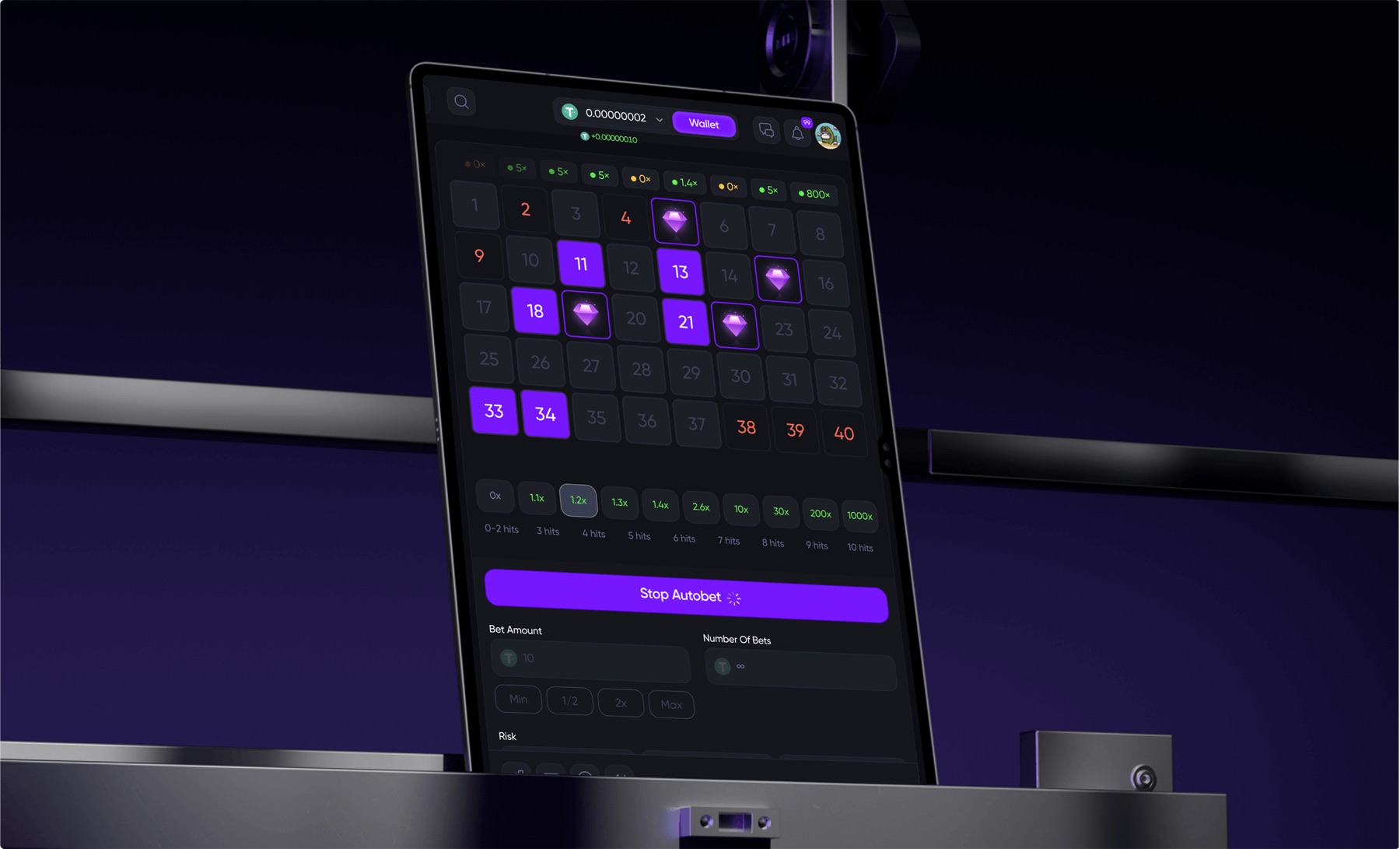
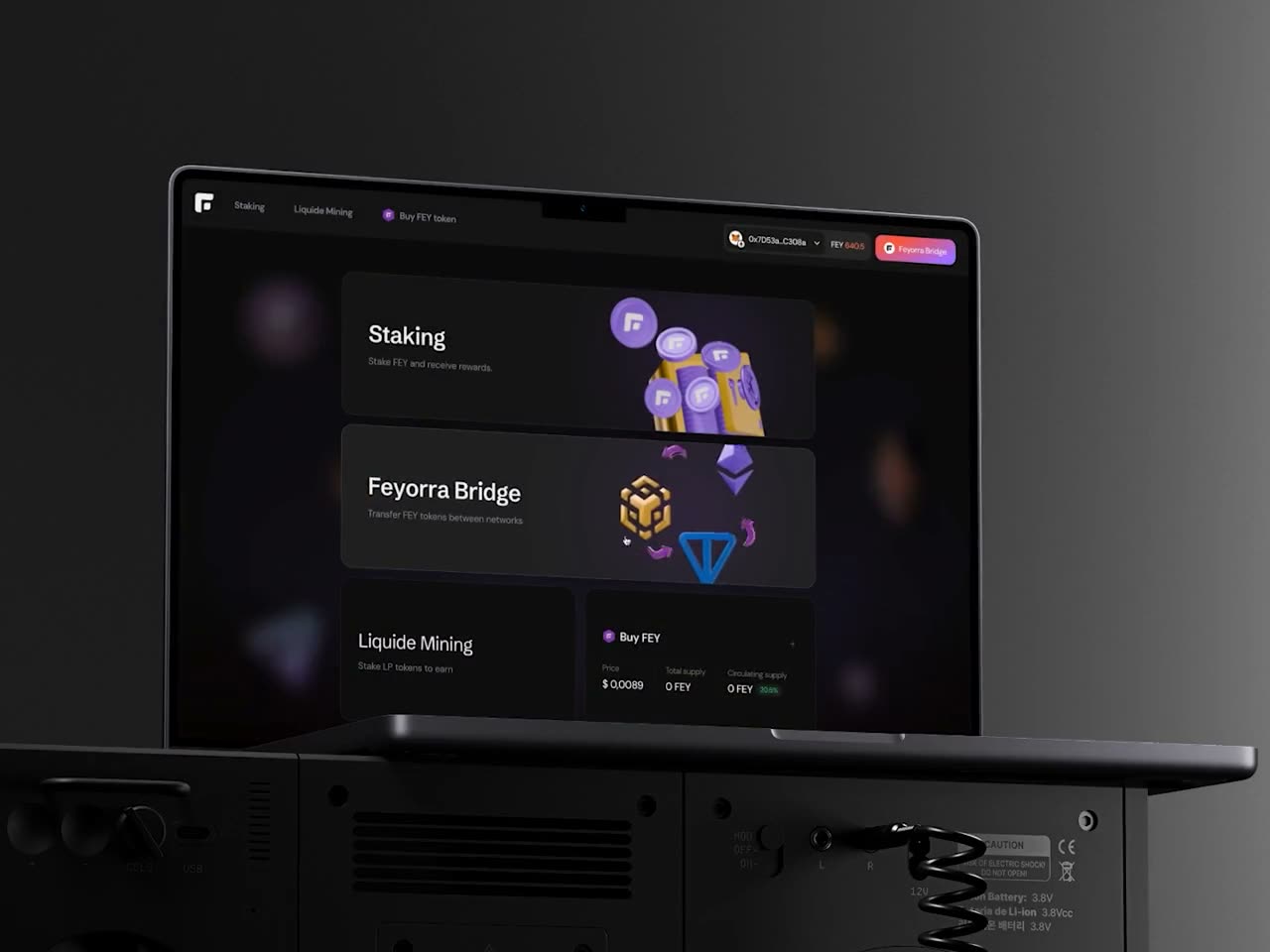
Staking, liquidity mining and a token bridge in one DeFi app that people trust with real money.
- Industry
- Web3, DeFi
- Scope
- Design, development, marketing
- Stack
- React, Wagmi, Node.js, PostgreSQL, Redis
- Token market cap
- Platform uptime
- Token holders
- Blockchains in one product
- Completed operations
- Average page load
- 01
Users could not see what happened to their money
One set of states: pending, success, error
- 02
Every screen looked like a different team built it
One design system with reusable components
- 03
Cross-chain transfers failed without a reason
Network checks first, fees shown up front
- 04
A real utility token nobody talked about
Education-first marketing tied to product use
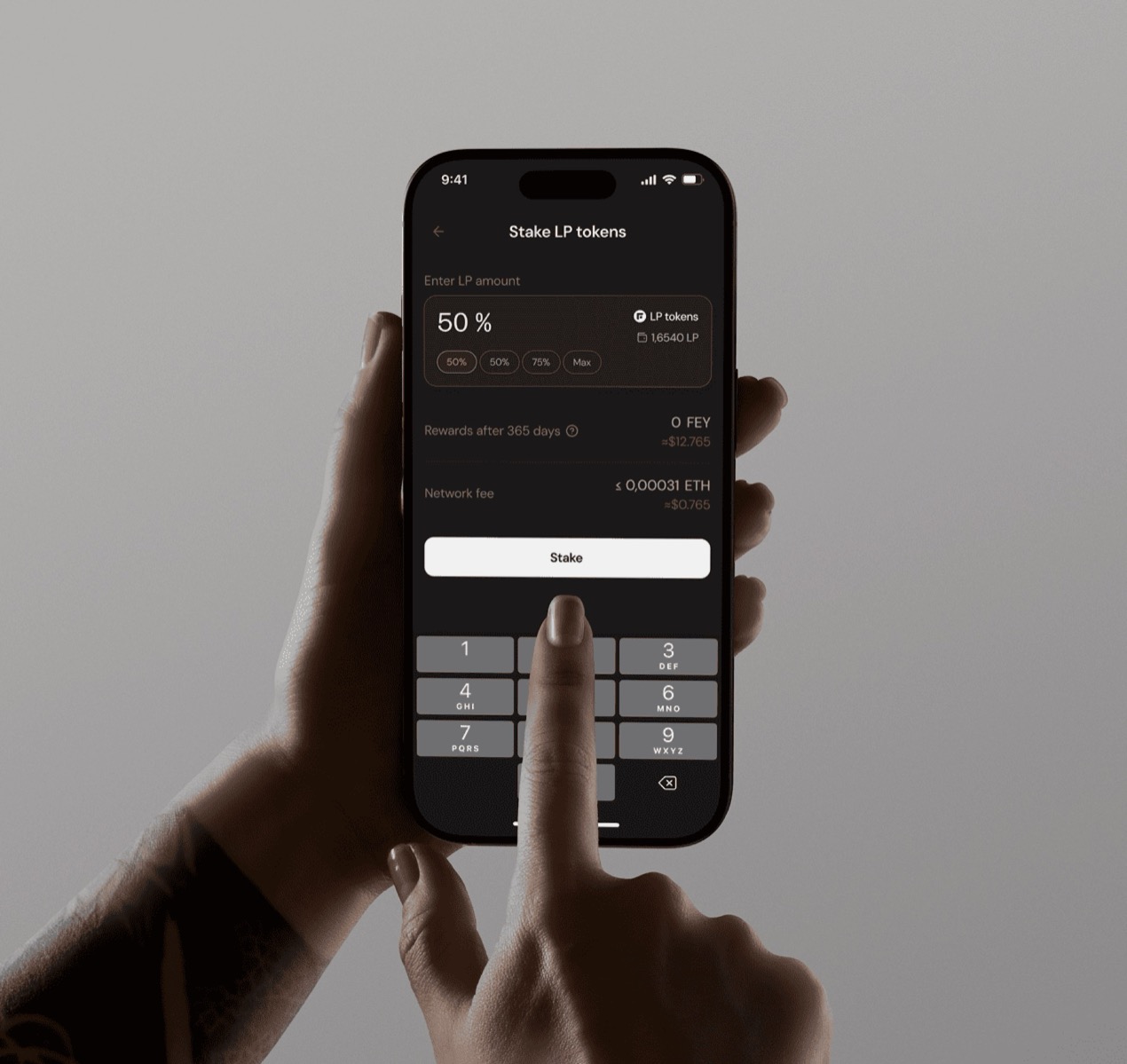
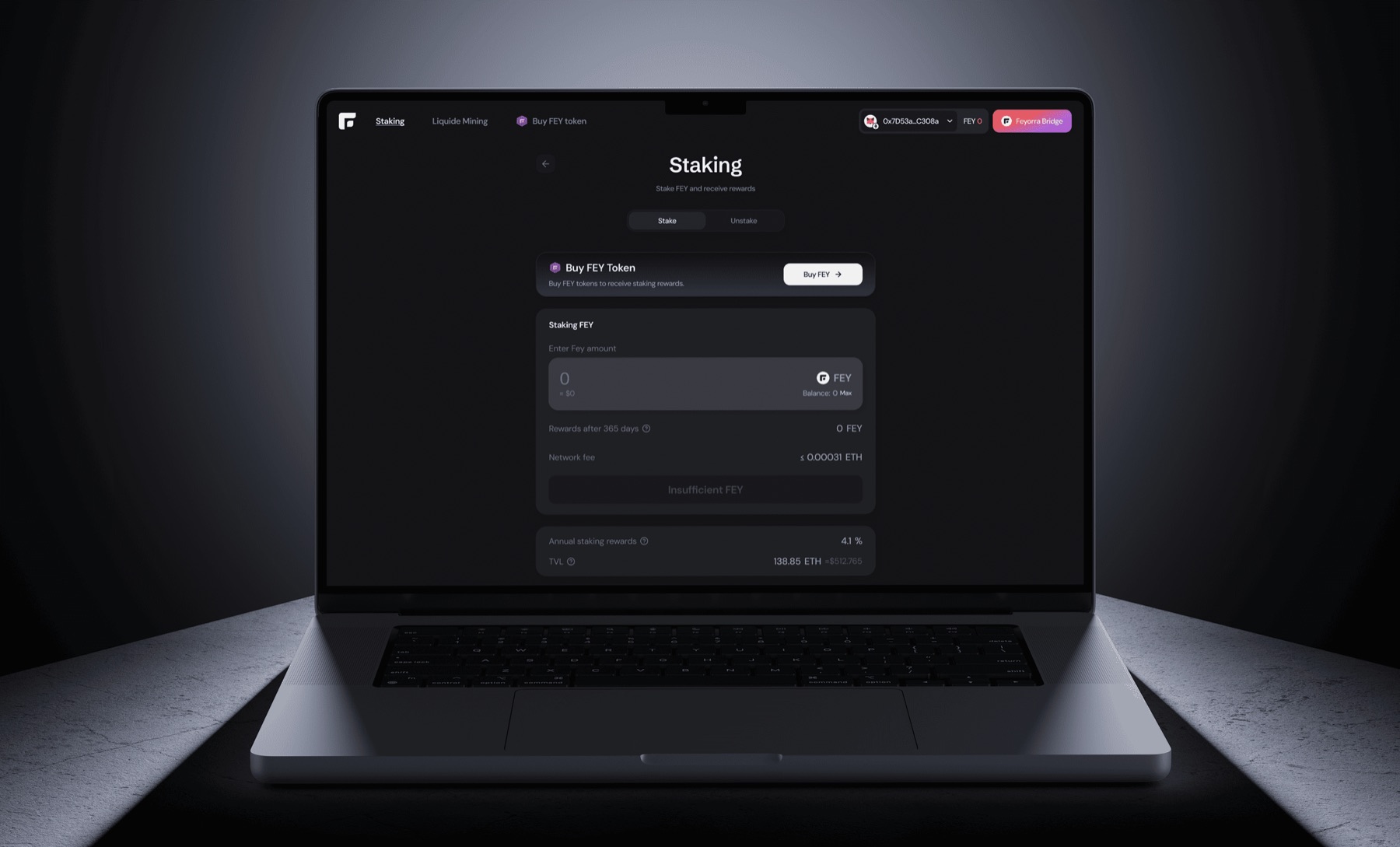
We redesigned the staking flow and the smart contract states behind it. Before confirming, users see how much they stake, when rewards start and what unstaking costs.
- Live balances from contract events
- Stake and unstake on one page
- Lock periods and penalties up front
- Friction and retries
- Completed operations
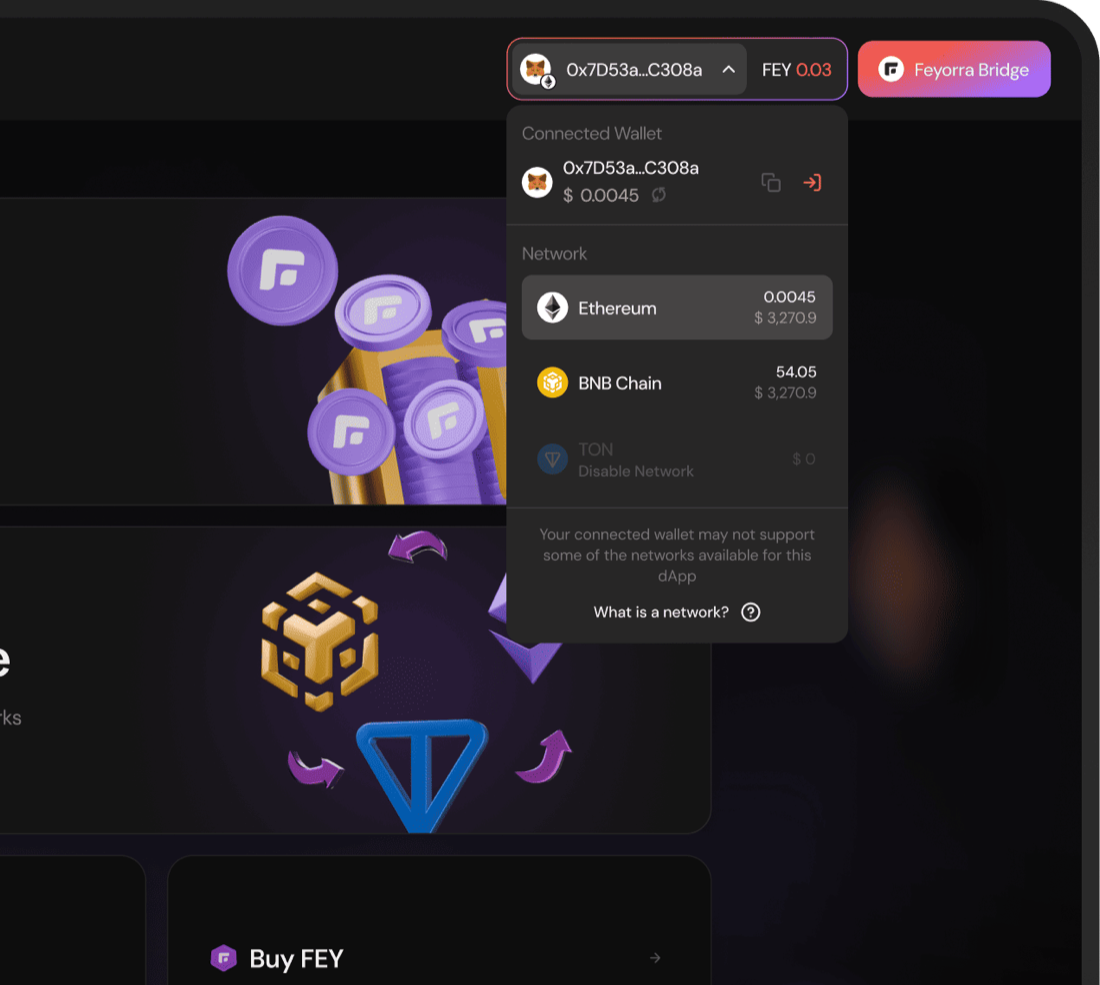
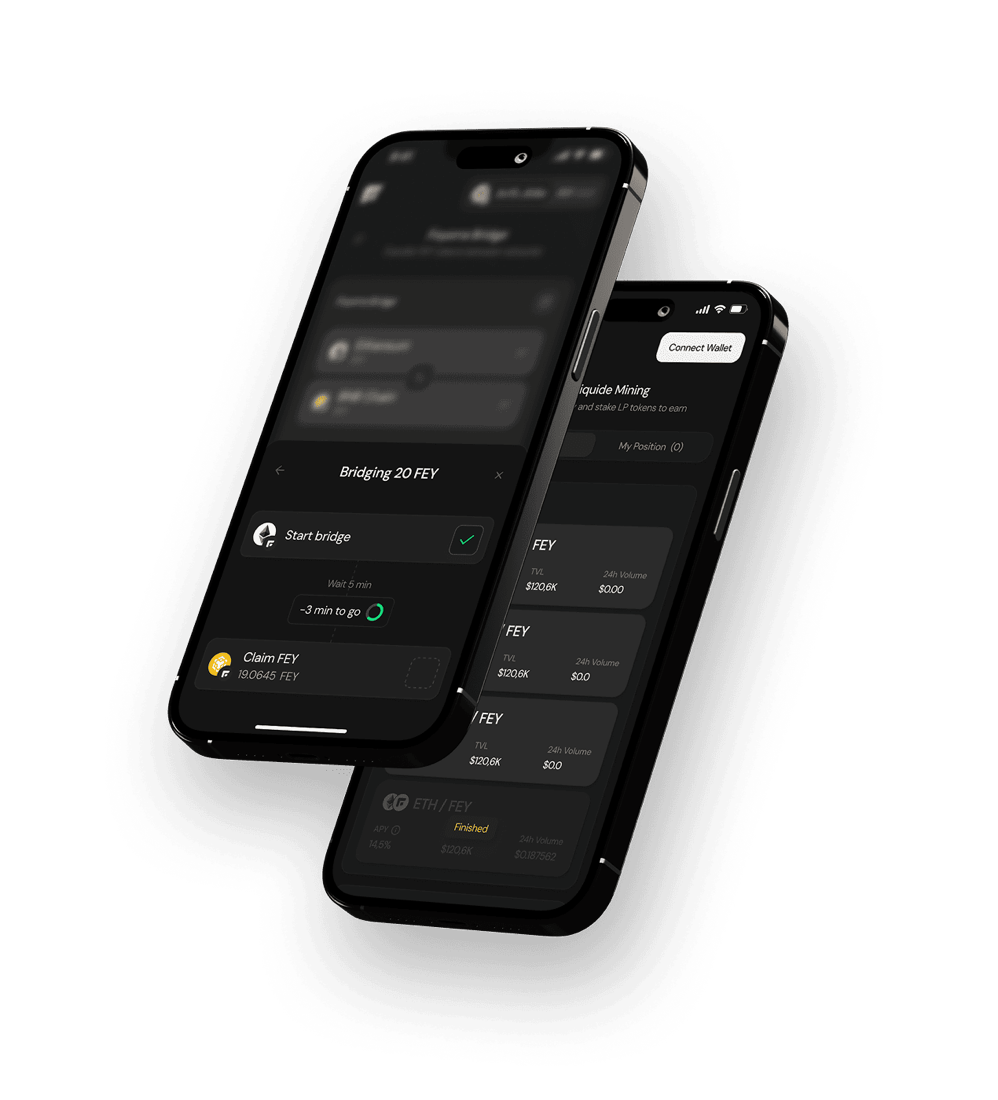
A single interface for every network. Users pick where tokens go from and to, then see the rate, both fees and the amount they receive before they confirm.
- Pending, processing, completed statuses
- Readable errors, no “unknown error”
- Network adapters and routing per chain
- Networks, one interface
- Blind transfers
We built the first go-to-market engine: clear positioning, daily content, plain-language DeFi guides and airdrop seasons tied to real product use.
- Token utility explained in one story
- XP, leaderboards and seasonal tasks
- Rewards for activity, not for hype
- Airdrop seasons
- Token holders