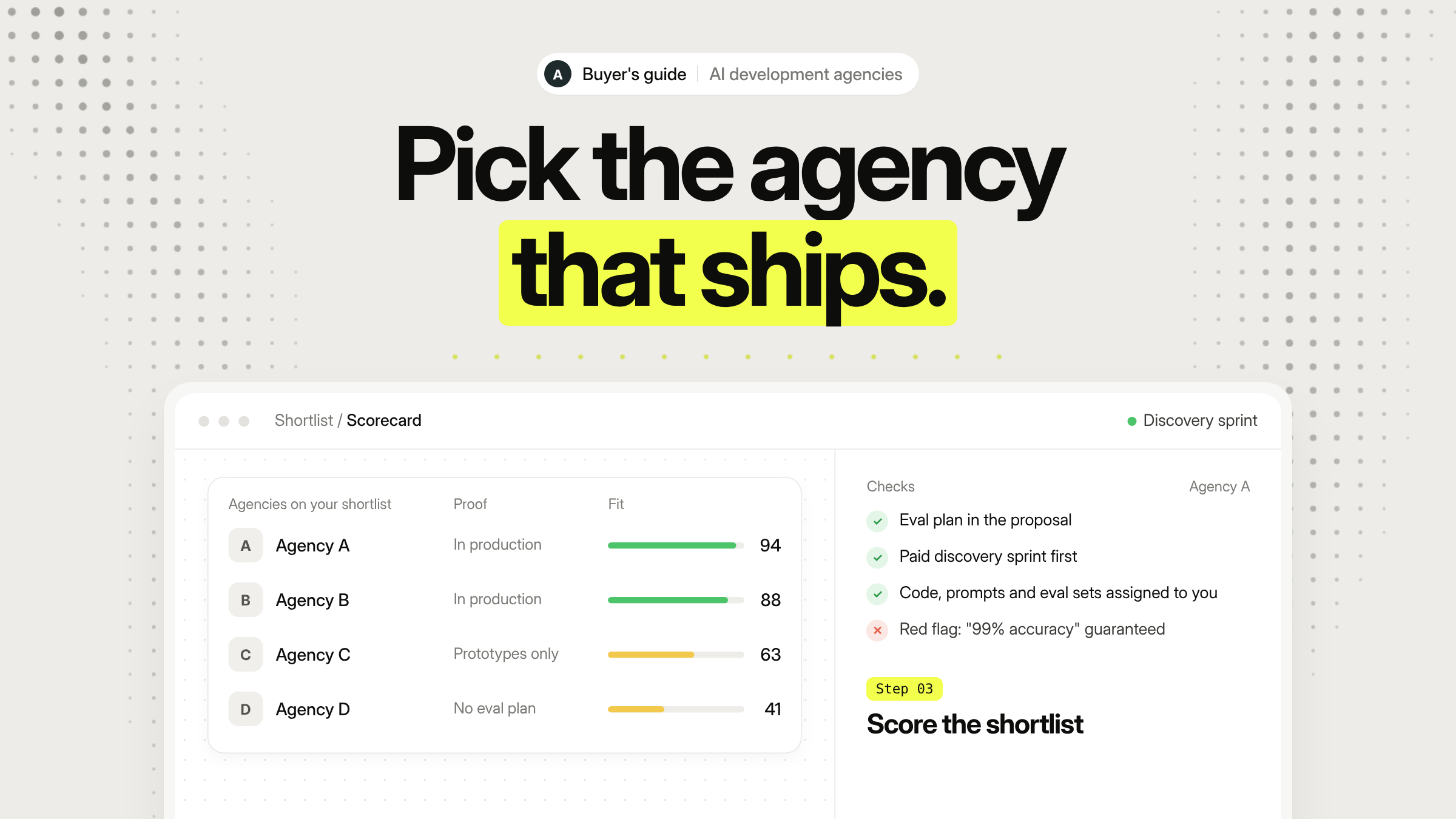
Design engineering as a subscription means you pay a flat monthly fee for a senior design engineer who delivers working product, not pictures of it. At Anivia Labs it costs $1,690 a month: Figma frames when they help, production-ready React and Next.js code in your repo, and a design system shipped as real components, with a DESIGN.md file your AI agents can follow whenever you need one. You can send work straight from Claude Code, Codex or Cursor through our MCP server.
That is a different deliverable from what "design" meant a few years ago. This article covers what changed, what a design engineering subscription delivers in 2026, and how the work actually runs.
Design used to end with a file. Now it ends with working software
For a decade the design deliverable was a Figma file. A developer rebuilt it in code, the designer checked the build, and both went back and forth until the product looked like the mockup again. Every handoff lost a little: spacing, empty states, motion, the hover nobody specified.
AI changed the economics of that chain from the code side first. In a controlled experiment by researchers from Microsoft Research, GitHub and MIT, developers with GitHub Copilot finished a programming task 55.8% faster than those without it (Peng et al., 2023). By 2025, 84% of developers were using or planning to use AI tools in their work, up from 76% a year earlier (Stack Overflow Developer Survey 2025).
Design adopted AI more slowly. In Figma's 2025 AI report, 59% of developers used AI for core work like code generation, against 31% of designers for core design work, and developers were more satisfied with the results (Figma, 2025). The gap is not about talent. A designer whose output is a static frame gets less from AI than someone whose output is code, because AI is very good at code.
So the role moved. A design engineer makes the design calls (layout, type, interaction, motion) and builds the result in production code, using AI agents for the repetitive parts. The person who designs the screen ships it. The chain of mockup, handoff, rebuild, design QA and fix rounds becomes two steps: brief, then live code.
Why a senior human still matters
Faster code is not the same as better product. In a 2025 randomized trial by METR, 16 experienced open-source developers using early-2025 AI tools took 19% longer on 246 real tasks than without them, while believing they had been about 20% faster (METR, 2025). METR now calls that result historical: tools have improved, and its 2026 follow-up could not even get a clean measurement, because so many developers refused to work without AI (METR, 2026). Trust has not caught up with usage either: in Stack Overflow's survey, more developers distrust the accuracy of AI output (46%) than trust it (33%).
The lesson for design work: AI multiplies whoever is steering it. Our design engineers use Claude Code and coding agents to handle the repetitive parts, while a senior person makes every design decision and reviews every line before it reaches your repo.
What you get in 2026
1. Production-ready code, not just frames
Product screens, flows and marketing pages are designed in the browser with every state covered, then shipped as React, Next.js and TypeScript components in reviewed pull requests to your GitHub. You review a live preview link instead of a static mockup. Figma is still there for brand explorations and stakeholder decks. It just isn't the deliverable.
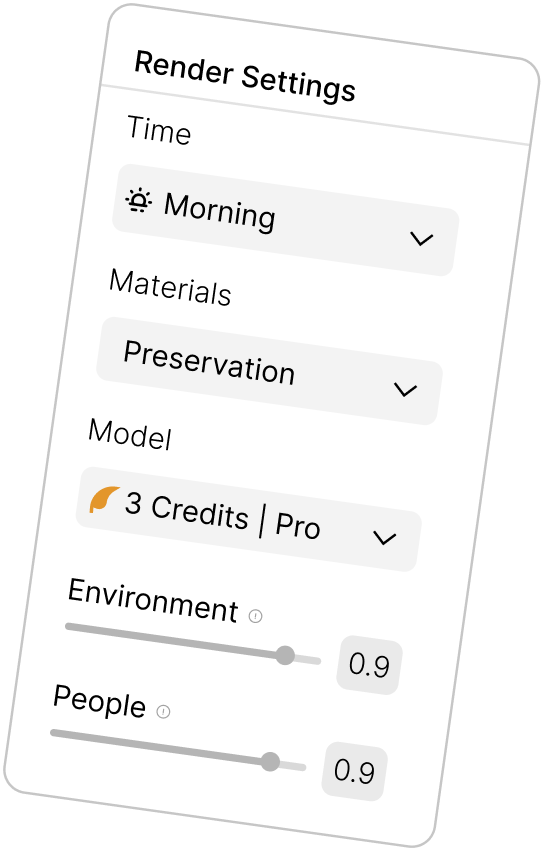
Rendervi's render settings panel, designed and built as production UI. From our Rendervi case study.
2. A design system delivered as components, not a PDF
A design system used to be a style guide: a PDF or a Figma page of colors, type and rules that developers were expected to read and copy. In 2026 the design system is the code: tokens, components and usage rules your team can extend without a designer in the room.
The payoff is measurable. In an experiment Figma ran with designers, those with access to a relevant, up-to-date design system finished their task 34% faster than those without one (Figma). When the system lives in code, developers and AI agents get the same speed-up, because they compose existing components instead of rebuilding them.
3. A DESIGN.md your AI agents can follow
Here is the part most teams miss. If your engineers build with AI agents, those agents need to know your design system too. Without that context they fall back to the most common patterns from their training data, and every new screen drifts toward a generic look.
DESIGN.md fixes that. It is a markdown file at the root of your repo that describes your design system for coding agents: tokens such as colors, type, spacing and radii, plus the rules and intent behind them (when to use which component, what never to do). The format was introduced by Google Labs with its Stitch tool and published as an open specification (DESIGN.md spec).
Whenever you need one, we deliver a DESIGN.md with the design system we build for you. When your team (or your agents) keeps building after us, new screens still look like your product.

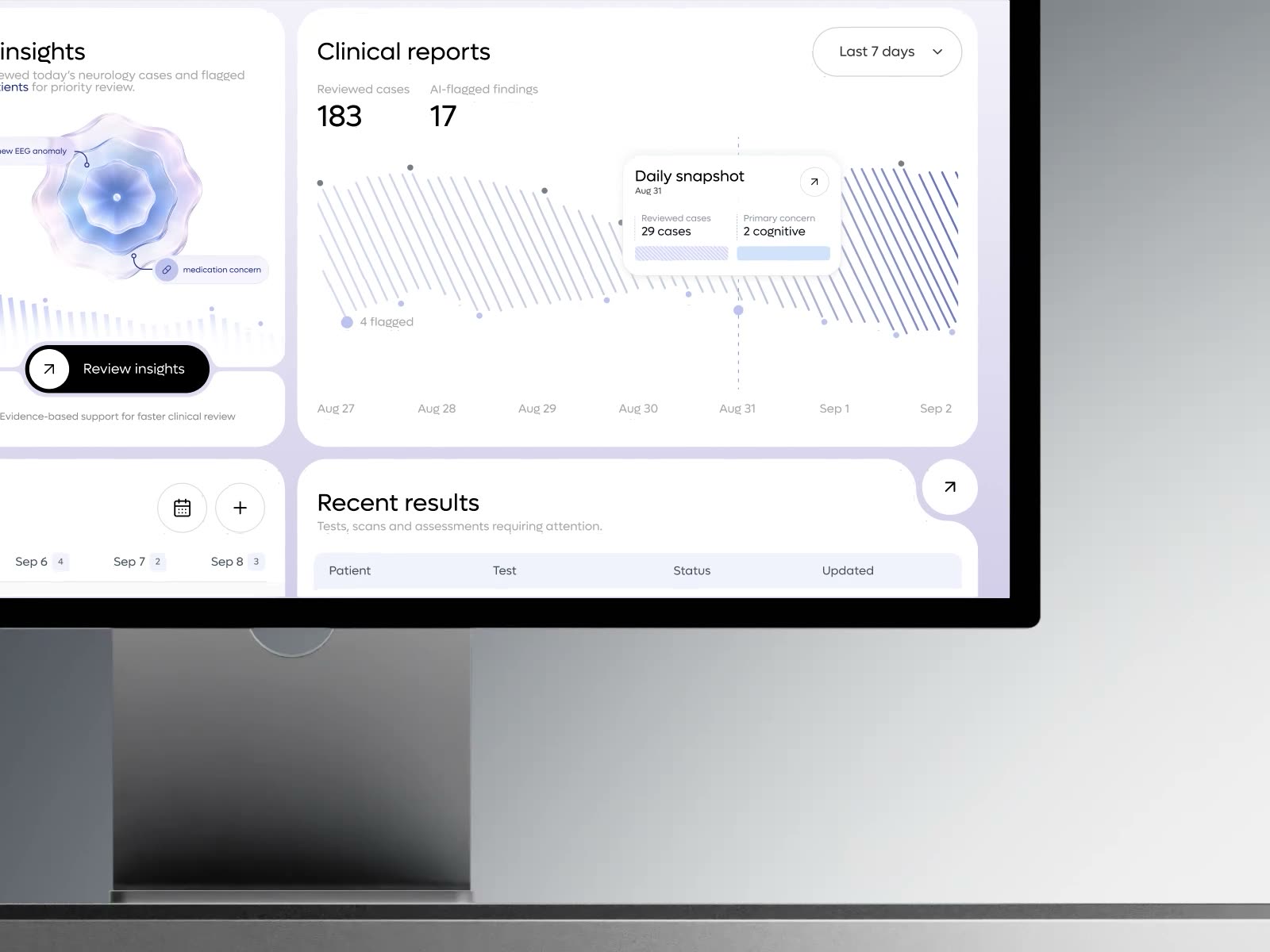
A clinical SaaS dashboard built on one consistent component system. From our healthcare dashboard case study.
4. Motion, interaction and accessibility, built in
Micro-interactions and page transitions that make the product feel finished. Contrast, focus states and keyboard paths built in from the start, not bolted on before launch.
A new way to brief design: MCP
The other big change is how work gets requested. The Model Context Protocol (MCP), introduced by Anthropic in November 2024 and adopted by OpenAI in March 2025, is an open standard for connecting AI assistants to outside tools (Wikipedia).
We use it to make briefing design as fast as writing code. Connect Claude Code, Codex or Cursor to your Anivia Labs workspace, type /anivia and what you need, and your AI writes the brief, attaches the files and puts the task on your board. It can also read your tasks, updates and chat. You get a pull request or a Figma file back. No call and no PRD needed, and it is included in every plan. See how it works on the MCP page.
For a founder who already lives in an AI coding tool, this means design requests come from the same place as everything else: "make the onboarding step 2 match our new pricing page" goes from your editor to our board in one line.
How the subscription works
- Start a 3-day free trial at /start. Real work with your team, free. Cancel before it ends and you pay nothing.
- Meet your lead within one business day, with a shared Slack channel and a task board.
- Add requests on the board or through MCP. Unlimited requests and revisions; the team works through them in your priority order.
- Review working software. Smaller tasks like a landing page section usually take one to three days. Larger features are split into steps you can test every few days, with a progress update every working day.
- Pause or cancel anytime. Billing runs in 31-day cycles and unused days carry over when you pause. No contracts.
Everything we make is yours from the moment it is made: code in your repositories, designs in your Figma.
| Plan | Price | What it covers |
|---|---|---|
| Design Engineering | $1,690 / month | Product and UX/UI design, design systems, front-end in Next.js and React, graphic design and branding, marketing materials |
| All-in-one | $2,490 / month | Everything in Design Engineering, plus backend and APIs, mobile apps in React Native and AI features |
| Dedicated Team | Scoped to your roadmap | A PM and a dedicated team, several workstreams in parallel |
Full details are on the pricing page.
What it looks like in practice: Rendervi
Rendervi is an AI render studio that turns rough 3D models into client-ready renders for architects. Our team built it from zero to first revenue in three weeks. After launch we reworked the landing page and onboarding for visitors coming from search, which took visitor-to-signup from 8% to 20%. We also used analytics to cut features nobody used, simplified the sidebar and set up a design system that gives every page a clear structure.
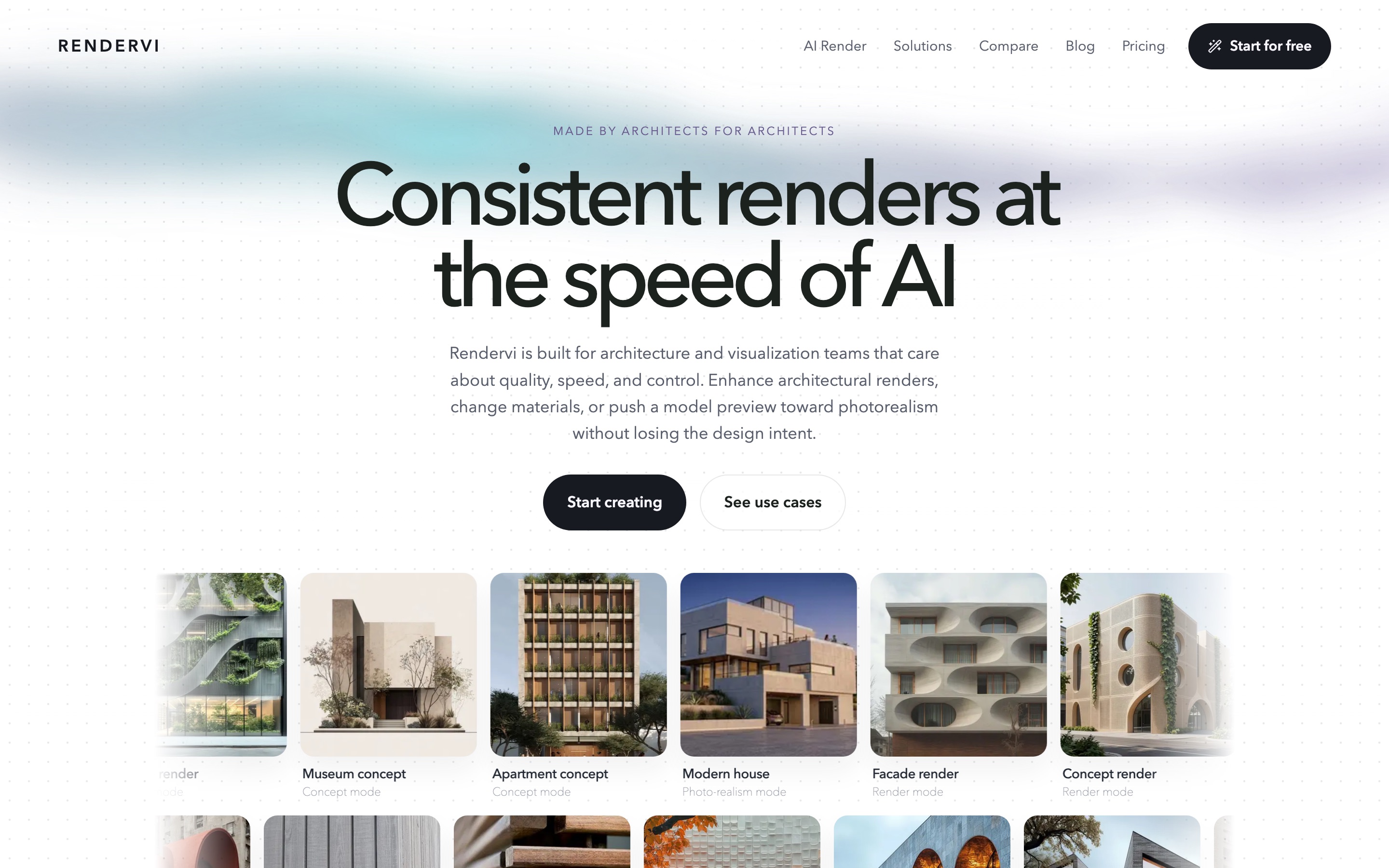
Rendervi's landing page.
As we put it in the case study: with AI it is easy to build features nobody uses. A startup should solve one clear problem perfectly before it scales. Read the full Rendervi case study.
Who it is for
Design engineering on a subscription fits early-stage startups that need to look sharp and ship fast: founders building an MVP or the next big feature, teams with a design backlog and no time to hire a designer and a frontend developer, and teams whose engineers already build with AI agents and need a design system those agents can follow.
It is not the best fit for fixed-bid projects with a signed spec, teams that need someone on-site, or work billed by the hour.
Good design still pays: McKinsey found that companies in the top quartile of its Design Index grew revenue 32 percentage points faster than their industry peers over five years (McKinsey). What changed is how you buy it.
FAQ
What is design engineering as a subscription?
A flat monthly fee for a senior design engineer who designs and builds your product in code. At Anivia Labs it is $1,690 a month, with a 3-day free trial and pause or cancel anytime.
Do I still get Figma files?
When they help: early explorations, brand work, stakeholder decks. The main deliverable is working code in your repo.
What is a DESIGN.md?
A markdown file in your repo that describes your design system (tokens, components, rules) for AI coding agents, so screens they build stay consistent with your product.
Do you deliver a DESIGN.md with the design system?
Yes, whenever you need one, for example when your engineers build new screens with AI agents. It sits in your repo next to the components.
Can I send design tasks from Claude Code or Cursor?
Yes. Connect your AI to our MCP server, type /anivia and what you need, and the task lands on your board with the brief and files attached.
Which stack do you use?
Mostly React, Next.js and TypeScript, with Tailwind or plain CSS depending on what you already have. Code goes to your GitHub as pull requests.
What if I need backend, mobile or AI features too?
The All-in-one plan ($2,490/month) adds engineers to the same subscription, and you can switch at your next billing date.
Want to see it on your product? Start the 3-day free trial, or read more about Design Engineering.
Sources
- Peng, Kalliamvakou, Cihon, Demirer. "The Impact of AI on Developer Productivity: Evidence from GitHub Copilot." arXiv:2302.06590, 2023.
- Stack Overflow Developer Survey 2025, AI section.
- Figma, "AI Report 2025" (2,500 product builders surveyed, January 2025).
- Figma, "Measuring the value of design systems."
- METR, "Measuring the Impact of Early-2025 AI on Experienced Open-Source Developer Productivity," July 2025, and the February 2026 uplift update.
- DESIGN.md open specification (Google Labs / Stitch).
- Model Context Protocol, Wikipedia.
- McKinsey, "The business value of design," 2018.